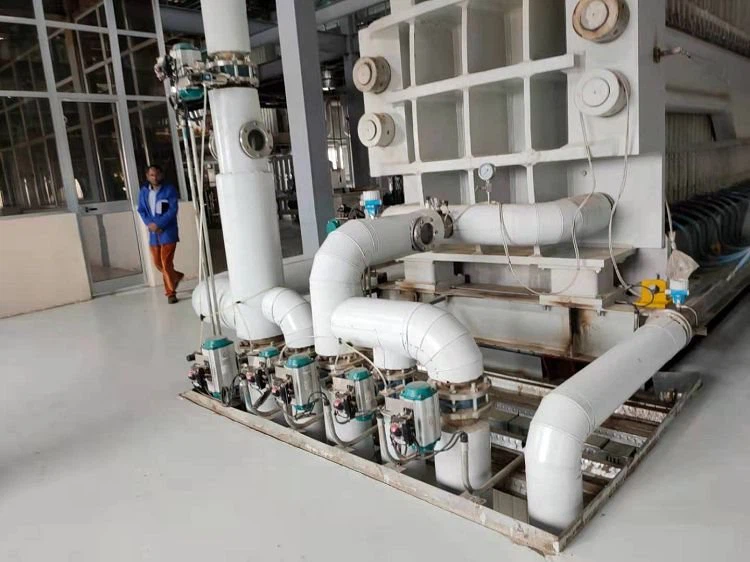
Corn Oil Refinery Machine
Winterization, also called dewaxing, is only applied when the oil is not clear at room temperature because of the presence of waxes or saturated triacylglycerols.
It is important to note that these compounds do not affect negatively the oil performance or functionality, but the appearance of the oil is not acceptable to consumers.
Send Inquiry
Product Details ofCorn Oil Refinery Machine
Introduction
The refining of corn oil is composed of several steps. Winterization and deodorization are some of the important parts.
Winterization, also called dewaxing, is only applied when the oil is not clear at room temperature because of the presence of waxes or saturated triacylglycerols. It is important to note that these compounds do not affect negatively the oil performance or functionality, but the appearance of the oil is not acceptable to consumers.
Thus, the objective of this step is the removal of high temperature melting components present in small quantities. The crystallization process normally used consists of cooling the oil down gradually to temperatures of 5 to 8ºC in a maturing tank. After increasing the crystal size at this temperature for 24 to 48 h, the solids are separated by centrifugation at 15-16ºC. This treatment ensures excellent clarity of oils when stored at either room or refrigeration temperatures.
Deodorization of fats and oils normally consists of steam distillation at elevated temperature under reduced pressure, although nitrogen has also been used. The purpose of this step is to remove volatile compounds contributing to oil taste and odor, total free fatty acids in physical refining and the residual free fatty acids from neutralized bleached oils. The deodorization conditions also contribute to the removal of contaminants and to the reduction of color of the oil due to the breakdown of the remaining carotenes at high temperature. The efficiency of deodorization is a function of pressure, temperature, residence time and volume of stripping gas. However, differences in the deodorization equipment used also have a major impact on efficiency. After the deodorization, the oil is cooled and addition of citric acid is recommended to chelate metal traces and increase its stability during storage.
The importance of these reactions is higher, as expected, as the temperature and the deodorization time increases, being dramatic in highly unsaturated oils. It is also remarkable that hydrolytic reactions have not been observed as the content of diacylglycerols remains unchanged, not only in this step but throughout the complete process.
Finally, it is important to take into account that long deodorization times and/or too high temperatures can have a devastating effect on the quality of the oil due not only to the chemical changes commented above but also to the distillation of a significant part of the natural tocopherols, which would decrease the stability of the refined oil. In this respect, the by-product obtained from the deodorization, i.e. deodorizer distillate, contains significant amounts of compounds of high-added value like tocopherols, sterols and hydrocarbons, and a great effort is being made for their recovery.
Technical Parameters
Photo/Videos
Hot Tags: corn oil refinery machine, China, suppliers, manufacturers, factory, customized, price, producer, exporter, seller, for sale
Send Inquiry
